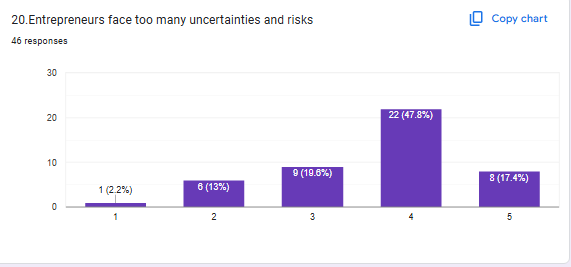
Over 53% of students in the workshop were unsure about taking the risks of starting a business, despite 98% agreeing that entrepreneurs drive economic growth!
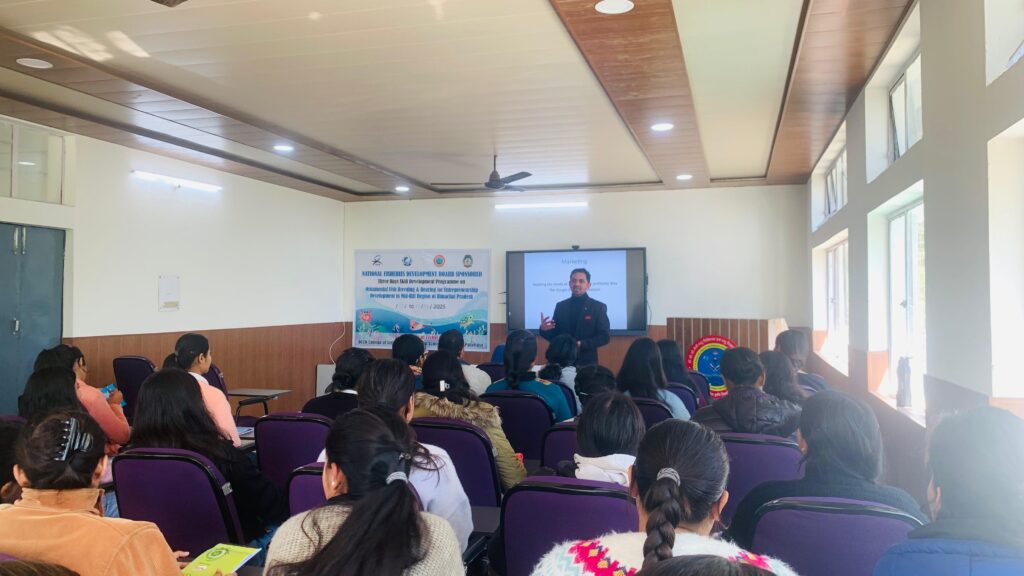
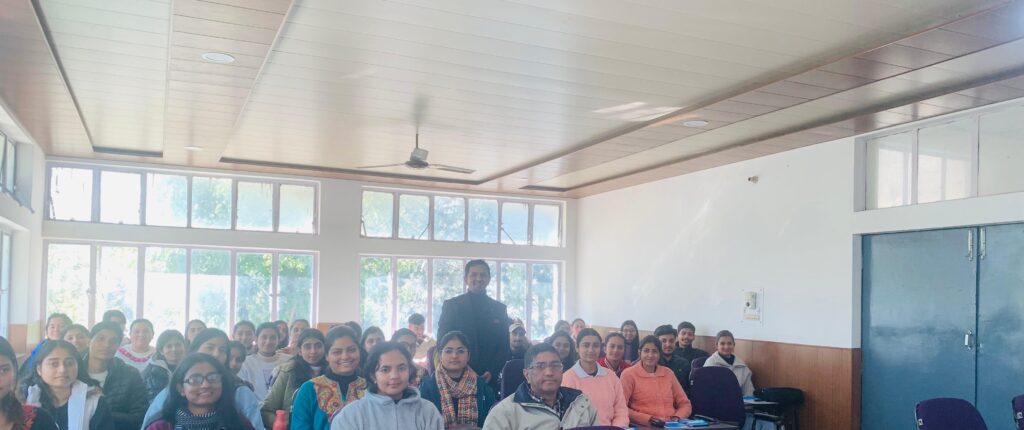
During a recent lecture at CSKHPKV Palampur, Himachal Pradesh, I engaged with students on the entrepreneurial mindset and essential marketing tools for business success. To gain deeper insights, I conducted an online survey to understand their aspirations, motivations, and challenges. The responses revealed a fascinating mix of enthusiasm, curiosity, and apprehension.
While many students were eager to explore entrepreneurship, they hesitated due to risks, financial constraints, and a lack of proper guidance. This highlighted the need for real-world exposure, mentorship, and strategic marketing knowledge to bridge the gap between entrepreneurial dreams and action.
Key Takeaways from This Enriching Discussion & Online Survey
1. Students Are Interested, But Many Are Unsure Where to Start
A significant number of students expressed interest in entrepreneurship. However, when asked about their plans, many admitted they lacked clarity on how to take the first step. The most common questions were:
- How do I identify a viable business idea?
- Where do I get funding from?
- What if my startup fails?
This highlights the need for structured entrepreneurship education at the university level—through courses, workshops, and real-life startup exposure.
2. Fear of Failure and Financial Constraints Are Major Barriers
The online survey revealed some eye-opening statistics:
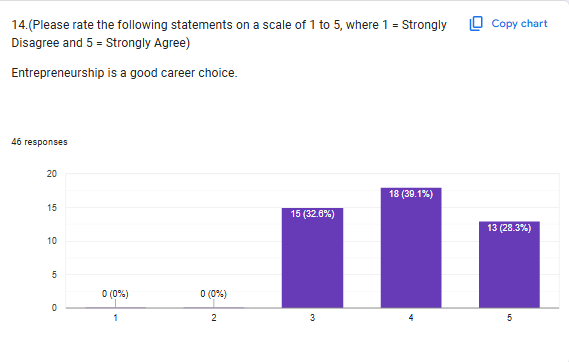
✅ 67.4% agreed that entrepreneurship is a good career choice, but 32.6% remained neutral.
✅ 78.2% admired entrepreneurs, but admiration didn’t always translate into action.
✅ Only 32% felt confident about starting a business, while 41% were unsure.
Clearly, enthusiasm exists, but confidence and risk tolerance remain key barriers.
A common concern was the fear of failure—many students felt launching a startup was too risky without financial security. Family and societal expectations also made them prioritize traditional jobs over entrepreneurship.
To address this, universities and policymakers must create financial safety nets, such as:
- Startup incubation programs offering seed funding.
- Government-backed schemes for student entrepreneurs.
- Low-interest loans & grants to encourage new ventures.
- Business mentorship programs to help students navigate risks.
3. Need for Real-Life Entrepreneurial Exposure
Another key takeaway was that students wanted real-life success stories and failure-to-success narratives. Theory alone doesn’t inspire action—students need firsthand exposure to startup founders, industry experts, and alumni who have walked the entrepreneurship path.
Universities can facilitate this by:
✅ Organizing guest lectures & panel discussions with successful entrepreneurs.
✅ Conducting startup visits & mentorship sessions.
✅ Hosting student pitch competitions with real investors.
In fact, I have been actively documenting and sharing stories of dairy entrepreneurs from the region, showcasing how small-scale ventures are making a big impact.
These stories not only highlight innovative business models but also demonstrate how rural entrepreneurs overcome financial, logistical, and marketing challenge.For more such stories visit the page below:
4. My lecture on Using the STP Model for Targeted Marketing
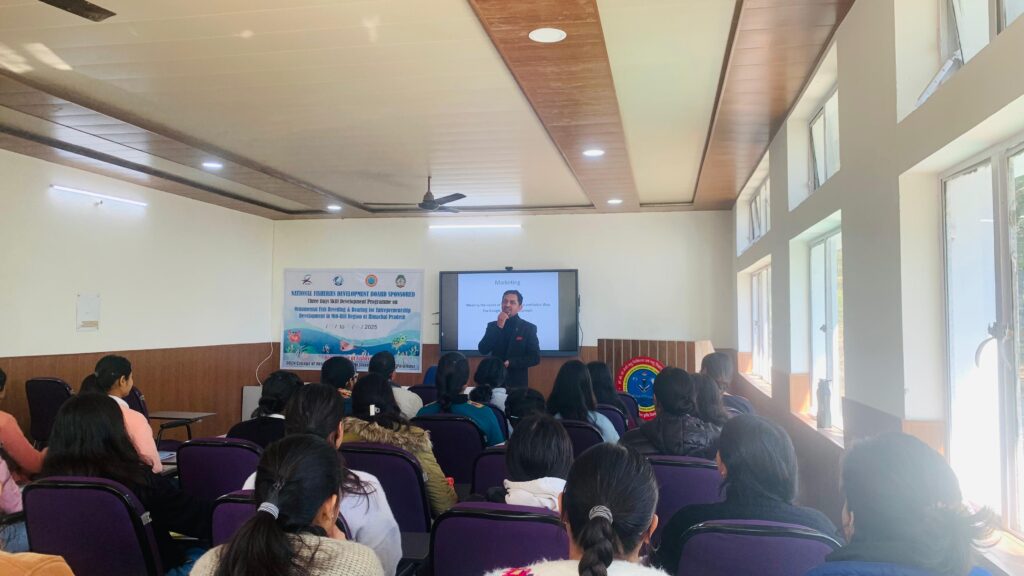
One of the key concepts I discussed was the STP Model of Marketing, which stands for:
🔹 Segmentation – Identifying different groups of potential customers.
🔹 Targeting – Selecting the most promising customer segment.
🔹 Positioning – Defining how the product/service stands out in the market.
Students found this model particularly useful in understanding niche markets.
For instance, a student interested in launching an organic dairy farm could:
- Segment customers based on health-conscious consumers.
- Target urban families and fitness enthusiasts.
- Position their product as a premium, farm-fresh, and chemical-free dairy solution.
By applying the STP approach, young entrepreneurs can build brands that truly connect with their audience.
5. The 4 As of Marketing: Making Products Accessible and Appealing
I also introduced students to the 4 As of Marketing, which help in making products desirable and accessible:
✅ Affordability – Can customers afford your product?
✅ Availability – Is your product easy to access?
✅ Awareness – Do people know about your product?
✅ Acceptability – Does your product meet customer needs & expectations?
Many students realized that even the best products can fail without the right marketing strategy.
For example, a startup launching handmade pet treats must ensure:
- Pricing is competitive (Affordability).
- Products are available online and in pet stores (Availability).
- Pet owners are aware through social media & vet clinics (Awareness).
- Meets demand for natural & healthy pet snacks (Acceptability).
I also discussed how brands like Amul and Country Delight effectively use the 4 As to increase reach, trust, and sales.In my last blog I had discussed a case study on smart marketing practices done by local outlet.(https://fieldnotes.deveshdiaries.in/breaking-barriers-in-dairy-farming-smart-marketing-for-maximum-profit/)
6. Linking Entrepreneurship with Sustainable & Rural Development
Given my background in veterinary sciences & livestock extension, I highlighted opportunities in agripreneurship & rural startups.
Students from agricultural & veterinary disciplines were particularly interested in:
- Dairy entrepreneurship
- Organic farming
- Livestock-based startups
- Rural e-commerce solutions
Encouraging sustainable business models can create employment in rural regions while leveraging students’ technical expertise.
Final Thoughts: Building a Stronger Entrepreneurial Ecosystem
This discussion and survey made it clear:
Entrepreneurship is an exciting yet challenging journey. While students have the passion and ideas, they need mentorship, financial support, and skill development opportunities to take the leap.
By integrating marketing strategies like the STP model & 4As framework, young entrepreneurs can enhance their chances of success.
At the same time, universities must take proactive steps to foster an entrepreneurial culture by providing resources, mentorship, and funding.
What challenges do you see in starting a business as a student?
Do you think universities are doing enough to support student entrepreneurs?
Let’s discuss in the comments! 👇🔥
Excellent, way to go…