The Pashu Kisan Credit Card (PKCC) scheme, launched by the Government of India, is a commendable initiative aimed at providing financial support to livestock farmers. It seeks to empower farmers by offering them access to credit for purchasing high-quality animals, feed, and equipment, thereby enhancing their productivity and income. However, my recent experiences in the Palampur region of Himachal Pradesh revealed stark contrasts in the awareness and adoption of this scheme, particularly when viewed through a gender lens.
A Success Story: Sunil Kumar’s Dairy Unit
During my fieldwork, I had the opportunity to interact with Sunil Kumar, a young and progressive dairy farmer. Sunil runs a dairy unit with four high-quality cows, producing 80 litres of milk daily. He has successfully utilized the PKCC scheme to scale his operations from two to four cows. With 50% of his animals pregnant and plans to purchase milking machines using the credit facility, Sunil exemplifies the potential of the PKCC scheme to transform small-scale dairy farming into a profitable venture. His story is a testament to how government initiatives, when effectively implemented and utilized, can drive rural development and economic growth.
Sunil’s success, however, stands in sharp contrast to the experiences of women dairy farmers in the same region.
The Gender Gap in Awareness and Adoption
A few days after meeting Sunil, I attended a training program for around 50 women dairy farmers in Palampur. These women, who have been rearing dairy cows for years, form the backbone of the rural dairy economy. However, when I asked them to fill out a survey on Farmer Producer Organizations (FPOs) and the PKCC scheme, the results were disheartening. None of the women were aware of the PKCC scheme or its benefits. Even when I explained the scheme in Hindi, they seemed reluctant to engage, highlighting a deep-rooted gender disparity in access to information and resources.
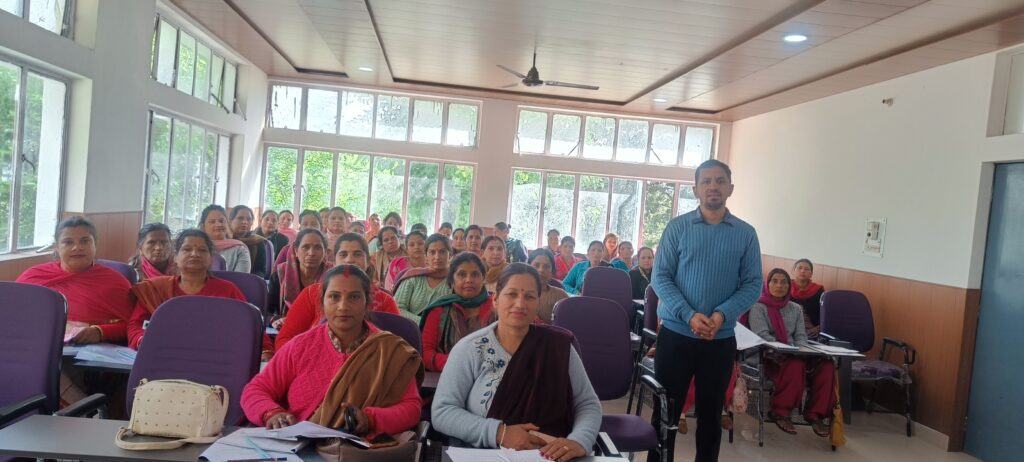
This lack of awareness is not just a reflection of individual ignorance but a systemic issue. Women farmers, despite their significant contribution to agriculture and livestock rearing, often remain excluded from the benefits of government schemes. The reasons for this are multifaceted:
- Limited Access to Information: Women in rural areas often have limited access to formal channels of information, such as newspapers, the internet, or government outreach programs. This restricts their awareness of schemes like PKCC.
- Mobility Challenges in Hilly Regions: In hilly areas, women often face significant challenges in traveling to banks and government offices. Poor transportation infrastructure and social restrictions make it difficult for them to access the benefits of schemes like PKCC.
- Social and Cultural Barriers: In many rural households, financial decisions are dominated by male members. Women are often excluded from discussions about credit and investments, even when they are directly involved in farming or dairy activities.
- Lack of Financial Literacy: Many women farmers lack the financial literacy required to understand and navigate credit schemes. This makes them hesitant to adopt initiatives like PKCC, even when they are aware of them.
- Inadequate Gender-Sensitive Outreach: Government schemes often fail to address the specific needs and challenges faced by women farmers. Outreach programs are rarely designed to be gender-sensitive, leading to low participation and adoption among women.
Bridging the Gender Gap: The Way Forward
The contrasting experiences of Sunil Kumar and the women dairy farmers in Palampur underscore the urgent need to address the gender gap in the implementation of government schemes like PKCC. Here are some steps that can be taken to ensure inclusivity and equity:
- Gender-Sensitive Awareness Campaigns: Government and NGOs should design awareness campaigns specifically targeting women farmers. These campaigns should be conducted in local languages and use mediums accessible to women, such as self-help groups (SHGs) and social media.
- Access Through Village Camps and Common Service Centers: To address mobility challenges in hilly regions, PKCC and other schemes should be made available through regular village camps or Common Service Centers (CSCs). This would make it much easier for women livestock farmers to access and adopt these schemes.
- Capacity Building: Financial literacy programs tailored for women farmers can empower them to understand and utilize credit schemes effectively. Training programs should focus on simplifying financial concepts and building confidence.
- Inclusive Policy Design: Policymakers must ensure that schemes like PKCC are designed with a gender lens. This includes simplifying application processes, providing collateral-free loans, and ensuring that women have equal access to credit.
- Strengthening SHGs and FPOs: Self-help groups and Farmer Producer Organizations can play a pivotal role in bridging the gender gap. By organizing women farmers into collectives, these institutions can facilitate access to credit, information, and markets.
- Monitoring and Evaluation: Regular monitoring and evaluation of scheme implementation should include gender-disaggregated data. This will help identify gaps and ensure that women farmers are not left behind.
Conclusion
The Pashu Kisan Credit Card scheme has the potential to revolutionize the livestock sector and improve the livelihoods of millions of farmers. However, its success hinges on equitable implementation. The stark gender disparity in awareness and adoption, as observed in Palampur, is a wake-up call for policymakers and stakeholders. By addressing these gaps and ensuring that women farmers are empowered with knowledge, resources, and opportunities, we can create a more inclusive and sustainable agricultural ecosystem.
As we celebrate the success stories of farmers like Sunil Kumar, let us also strive to ensure that the benefits of such schemes reach every corner of rural India, including its women farmers. Only then can we truly harness the potential of initiatives like the Pashu Kisan Credit Card scheme.
Share Your Thoughts
The Pashu Kisan Credit Card (PKCC) scheme has the potential to transform the lives of millions of farmers, but its success depends on equitable implementation. The stories of Sunil Kumar and the women dairy farmers in Palampur highlight both the promise and the challenges of this initiative. As we work towards a more inclusive and sustainable agricultural ecosystem, it is crucial to address the gender gap in awareness and access to such schemes.
What are your thoughts on this issue?
- Have you or someone you know benefited from the Pashu Kisan Credit Card (PKCC) scheme?
- What steps do you think can be taken to ensure that more women farmers are aware of and can access such schemes?
- Do you have any suggestions for improving the outreach and implementation of government initiatives in rural areas?
Share your experiences, ideas, and feedback in the comments below. Let’s start a conversation to make schemes like PKCC more inclusive and impactful for all farmers, regardless of gender. Together, we can bridge the gap and empower rural communities!