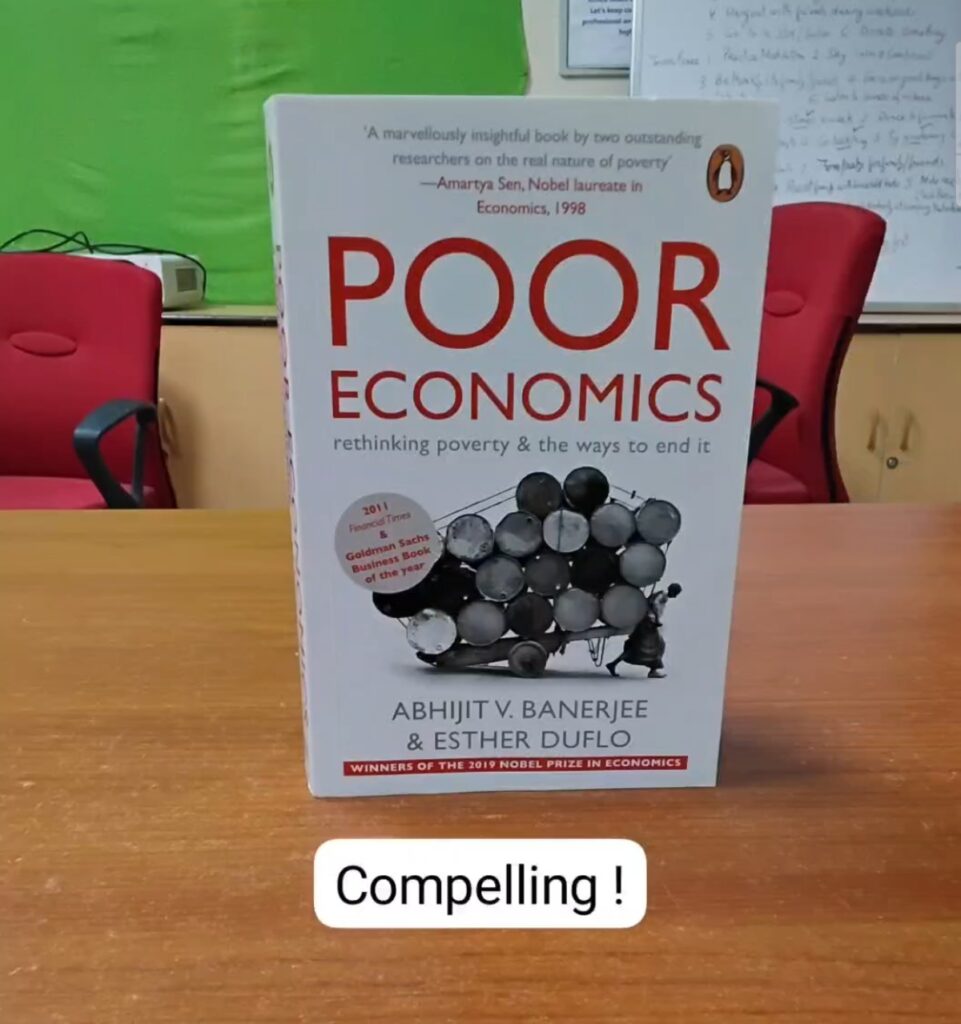
Poor Economics हमें क्या सिखाती है
जब भी हम “गरीबी” शब्द सुनते हैं, हमारे दिमाग में कुछ सामान्य तस्वीरें आती हैं—भूखे बच्चे, टूटी झोपड़ियाँ, बेरोजगारी और संघर्ष। लेकिन क्या गरीबी केवल पैसों की कमी है? या उससे कहीं अधिक गहरी समस्या?
विश्वप्रसिद्ध अर्थशास्त्री Abhijit Banerjee और Esther Duflo अपनी प्रसिद्ध पुस्तक Poor Economics में यही सवाल उठाते हैं। किताब का पहला अध्याय गरीबी को देखने का हमारा पूरा तरीका बदल देता है।
आँकड़ों की दुनिया बनाम इंसानी कहानी
कल्पना कीजिए कि आपको बताया जाए:
- हर साल लाखों बच्चे भूख और बीमारी से मर जाते हैं।
- करोड़ों बच्चे स्कूल तो जाते हैं, लेकिन पढ़ नहीं पाते।
- दुनिया के कई हिस्सों में लोग आज भी बुनियादी इलाज से वंचित हैं।
ये आँकड़े दुखद हैं, लेकिन सच यह है कि इतने बड़े आँकड़े अक्सर हमें असहाय बना देते हैं।
लेखक एक दिलचस्प प्रयोग का उदाहरण देते हैं। कुछ छात्रों को अफ्रीका में भूख से पीड़ित लाखों लोगों के आँकड़े दिखाए गए। दूसरे छात्रों को “रोकिया” नाम की एक छोटी बच्ची की कहानी सुनाई गई।
परिणाम चौंकाने वाले थे।
लोगों ने लाखों लोगों की तुलना में उस एक बच्ची के लिए अधिक दान दिया।
यानी इंसान आँकड़ों से नहीं, कहानियों से जुड़ता है।
गरीबी कोई एक समस्या नहीं
हम अक्सर सोचते हैं कि गरीबी का एक बड़ा कारण होगा—जैसे भ्रष्टाचार, जनसंख्या, या बेरोजगारी। लेकिन Poor Economics कहती है कि गरीबी वास्तव में सैकड़ों छोटी समस्याओं का मिश्रण है।
किसी गरीब परिवार की जिंदगी में:
- शिक्षा की समस्या है,
- स्वास्थ्य की समस्या है,
- पोषण की कमी है,
- जानकारी की कमी है,
- बचत की समस्या है,
- और भविष्य की अनिश्चितता है।
यही कारण है कि गरीबी का कोई “एक जादुई समाधान” नहीं हो सकता।
विदेशी सहायता: मदद या नुकसान?
दुनिया में लंबे समय से यह बहस चलती रही है कि गरीब देशों को विदेशी सहायता दी जानी चाहिए या नहीं।
कुछ अर्थशास्त्री कहते हैं:
“गरीब देश गरीबी के जाल में फँसे हैं। उन्हें बाहर निकालने के लिए बड़ी मदद जरूरी है।”
दूसरे कहते हैं:
“बहुत अधिक सहायता लोगों को निर्भर बना देती है और स्थानीय अर्थव्यवस्था को कमजोर करती है।”
सवाल यह नहीं कि कौन पूरी तरह सही है।
असल सवाल यह है:
कौन-सी मदद वास्तव में काम करती है?
मच्छरदानी की कहानी
किताब में मलेरिया रोकने के लिए मच्छरदानियों का उदाहरण दिया गया है।
बहस थी:
- क्या गरीब लोगों को मच्छरदानी मुफ्त दी जाए?
- या उनसे पैसे लिए जाएँ ताकि वे उसकी “कद्र” करें?
कुछ लोग कहते थे कि मुफ्त चीजों की लोग इज्जत नहीं करते।
लेकिन वैज्ञानिक प्रयोगों में पाया गया कि गरीब परिवार मुफ्त मच्छरदानी मिलने पर उनका उपयोग करते थे और इससे बीमारी कम हुई।
यानी कई बार हमारी धारणाएँ गलत साबित हो सकती हैं।
गरीबी का जाल क्या होता है?
किताब का सबसे महत्वपूर्ण विचार है — “Poverty Trap”।
इसका मतलब है:
गरीबी → कम निवेश → कम अवसर → फिर गरीबी
उदाहरण के लिए:
यदि किसान के पास बीज खरीदने के पैसे नहीं हैं,
तो उसकी फसल कमजोर होगी,
आय कम होगी,
और अगले साल भी वह निवेश नहीं कर पाएगा।
यानी गरीबी खुद को दोहराती रहती है।
समाधान कहाँ है?
लेखकों का जवाब बहुत दिलचस्प है।
वे कहते हैं:
गरीबी को खत्म करने के लिए बड़े भाषण नहीं, छोटे प्रभावी कदम चाहिए।
जैसे:
- बेहतर टीकाकरण,
- स्कूलों में पोषण,
- सस्ती दवाइयाँ,
- आसान बचत योजनाएँ,
- और सही जानकारी।
यानी विकास “एक बड़ी क्रांति” से नहीं, बल्कि हजारों छोटे सुधारों से आता है।
प्रमाण की ताकत
इस किताब की सबसे बड़ी खासियत यह है कि लेखक केवल सिद्धांत नहीं देते। वे हर बात को वास्तविक प्रयोगों और डेटा से साबित करने की कोशिश करते हैं।
इसी सोच से उन्होंने:
Abdul Latif Jameel Poverty Action Lab (J-PAL)
की स्थापना की, जहाँ दुनिया भर में गरीबी पर वैज्ञानिक प्रयोग किए जाते हैं।
आखिर यह किताब इतनी महत्वपूर्ण क्यों है?
क्योंकि यह हमें सिखाती है कि:
- गरीब लोग “अलग” नहीं होते,
- वे भी हमारे जैसे सपने देखते हैं,
- लेकिन उनकी परिस्थितियाँ उनके फैसलों को सीमित कर देती हैं।
और सबसे महत्वपूर्ण बात—
गरीबी कोई असंभव समस्या नहीं है।
लेकिन उसे समझने के लिए हमें:
- संवेदनशीलता,
- धैर्य,
- और प्रमाण-आधारित सोच की जरूरत है।
अंतिम विचार
आज जब दुनिया असमानता, बेरोजगारी और आर्थिक असुरक्षा से जूझ रही है, Poor Economics पहले से अधिक प्रासंगिक हो गई है।
यह किताब हमें सिखाती है कि दुनिया बदलने के लिए हमेशा बड़े नारे जरूरी नहीं होते।
कई बार,
एक सही नीति,
एक छोटा प्रयोग,
या एक साधारण सुधार,
लाखों जिंदगियाँ बदल सकता है।
Is Poverty Just a Lack of Money?
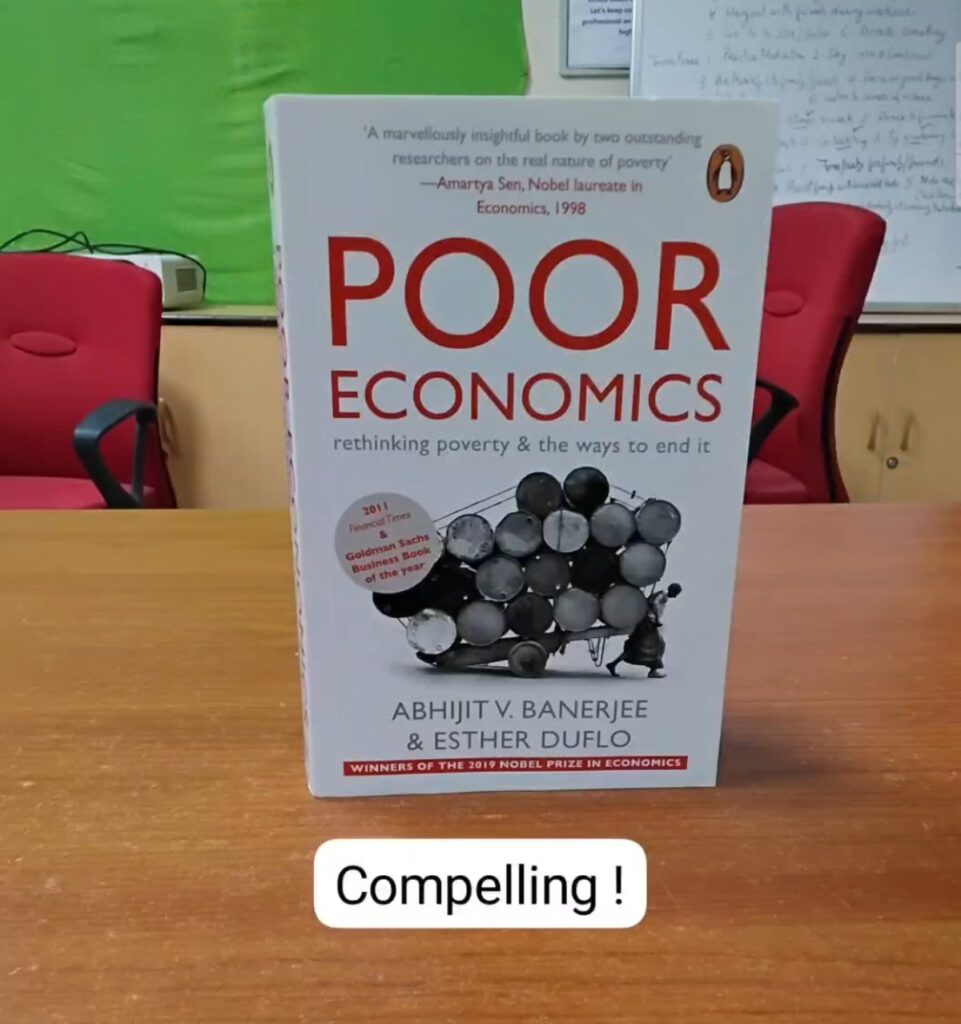
What Poor Economics Teaches Us About the Real Nature of Poverty
When we hear the word “poverty,” certain images immediately come to mind — hungry children, broken homes, unemployment, and struggle. But is poverty really just about money? Or is it something much deeper?
In their globally acclaimed book Poor Economics, economists Abhijit Banerjee and Esther Duflo challenge the way the world thinks about poverty. The first chapter of the book does not simply discuss economics; it changes the entire conversation around development, aid, and human suffering.
Why Big Numbers Fail to Move Us
The book opens with disturbing statistics:
- Millions of children die before the age of five every year.
- Maternal mortality remains extremely high in parts of Africa.
- Millions of children in developing countries still cannot read basic text.
These numbers are heartbreaking. Yet strangely, they often leave people feeling helpless instead of motivated.
The authors describe a fascinating experiment. One group of students was shown statistics about millions of starving people in Africa. Another group was shown the story of a single young girl named “Rokia.”
The result was surprising.
People donated far more money to help one child than to help millions.
This reveals an important psychological truth:
Humans connect emotionally with stories, not statistics.
Poverty Is Not One Big Problem
Most people search for one grand explanation for poverty:
- corruption,
- overpopulation,
- unemployment,
- bad governance,
- or lack of resources.
But Poor Economics argues that poverty is not one problem at all.
It is actually a combination of hundreds of smaller problems:
- poor healthcare,
- weak education,
- lack of nutrition,
- financial insecurity,
- absence of information,
- and unstable institutions.
That is why there is no single “magic solution” to poverty.
The Great Debate: Aid or No Aid?
For decades, economists have argued about foreign aid.
Some believe:
Poor countries are trapped in poverty and need large-scale help.
Others argue:
Too much aid creates dependency and destroys local initiative.
Economist Jeffrey Sachs strongly supports large development aid programs. In contrast, critics like William Easterly and Dambisa Moyo argue that excessive aid can damage local markets and encourage corruption.
But the authors of Poor Economics refuse to blindly support either side.
Instead, they ask a simpler and more practical question:
What actually works?
The Story of the Mosquito Net
One of the book’s most famous examples involves malaria prevention.
Researchers wanted to know:
- Should mosquito nets be given away for free?
- Or should poor families pay for them so they “value” them more?
Many experts claimed that people do not appreciate free products.
But real-world experiments revealed something different.
Poor families often used free mosquito nets responsibly, and malaria rates fell significantly.
The lesson was powerful:
Many assumptions about the poor are based more on ideology than evidence.
What Is a Poverty Trap?
The book introduces the idea of a “poverty trap.”
It works like this:
Poverty → Low Investment → Low Opportunity → More Poverty
Imagine a farmer who cannot afford fertilizer. Because of this, his harvest remains weak. Since he earns very little, he still cannot buy fertilizer the next year.
Poverty keeps reproducing itself.
This idea lies at the center of modern development economics.
Small Changes Can Transform Lives
One of the most inspiring messages of Poor Economics is that poverty does not always require dramatic revolutions or massive political slogans.
Sometimes, small interventions can create enormous change:
- better vaccination systems,
- school meals,
- affordable medicines,
- savings programs,
- or access to basic information.
Development, the authors argue, often happens step by step.
Evidence Matters More Than Ideology
Perhaps the most important contribution of the book is its insistence on evidence.
The authors helped create:
Abdul Latif Jameel Poverty Action Lab (J-PAL),
a global research organization that uses scientific experiments to study anti-poverty policies.
Instead of relying on theories alone, researchers test real solutions in real communities.
This changed development economics forever.
Poverty Is Also About Human Potential
The book repeatedly reminds readers that poverty is not simply about income.
A poor child may never receive proper education.
A talented girl may never become a scientist.
A future entrepreneur may never get a chance to start a business.
Poverty destroys possibilities before they even exist.
That is why fighting poverty is not just an economic responsibility — it is a moral one.
Why This Book Still Matters Today
At a time when the world faces rising inequality, unemployment, inflation, and social insecurity, Poor Economics feels more relevant than ever.
The book teaches us that:
- poor people are not fundamentally different from anyone else,
- they respond to incentives, stress, and uncertainty just like everyone else,
- and effective policy requires humility, patience, and evidence.
Most importantly, the book reminds us that poverty is not impossible to solve.
But solving it requires more than emotions, ideology, or slogans.
It requires understanding how poor people actually live.
Final Thought
The greatest strength of Poor Economics is its honesty.
It does not promise one magical answer.
It does not claim to “end poverty overnight.”
Instead, it offers something far more valuable:
a practical, human-centered, evidence-based way of thinking about the world.
And perhaps that is where real change begins.